About Klaimed
Creativity doesn't only belong to the big houses. Our mission is to make design protection accessible to every creator, from a two-person studio to a global house: seeing where their designs live online, following their success and knowing when they are being copied.
The copies that do the most damage don't use a name. They take the silhouette of a bag, the curve of a chair, the panels of a sneaker, and sell them under no brand at all, with their own photos. Keyword search can't see them. Logo detection can't see them. For the people who designed the original, they simply don't exist.
Small studios and independent labels are copied too, often faster, and often by companies with far bigger budgets. Yet protecting a design at this level has always been something only the largest houses could pay for. We built our technology from day one to be accessible to every creator: the highest quality of detection, at a price they can afford.
That is why we never sell to brands directly. IP firms, design search firms and brand-protection platforms already advise companies of every size. By powering them, our technology reaches the small creator through the expert they already trust.
And it stays sovereign. Everything happens in the EU: your data is hosted and stored here, and our models are trained on our own infrastructure.
The tip of the iceberg carries a brand name. Everything below it is a lookalike, perfectly hidden.
Before building anything else, we wanted to know whether a machine could truly read design. So we picked one of the hardest products there is: the watch. Dozens of small parts, references that differ in tiny details, and copies that are often close to perfect.
We set the bar as high as we could. After a few months, our first model recognised every part of a watch, at scale, the way an expert would. That was the kickoff for Klaimed.
Today the same approach runs across 146 product types, from handbags and sneakers to chairs, and finds the lookalikes that carry no name at all.
We look for the unbranded lookalikes, not only the copies that carry a name or a logo.
A score is not evidence. Every match shows the attributes behind it, so a takedown or a legal opinion stands on facts.
Design protection shouldn't be a luxury. Our technology is built so the small studio gets the same detection as the global house.
Everything happens in the EU, from data storage to model training. Your clients' designs never leave it.
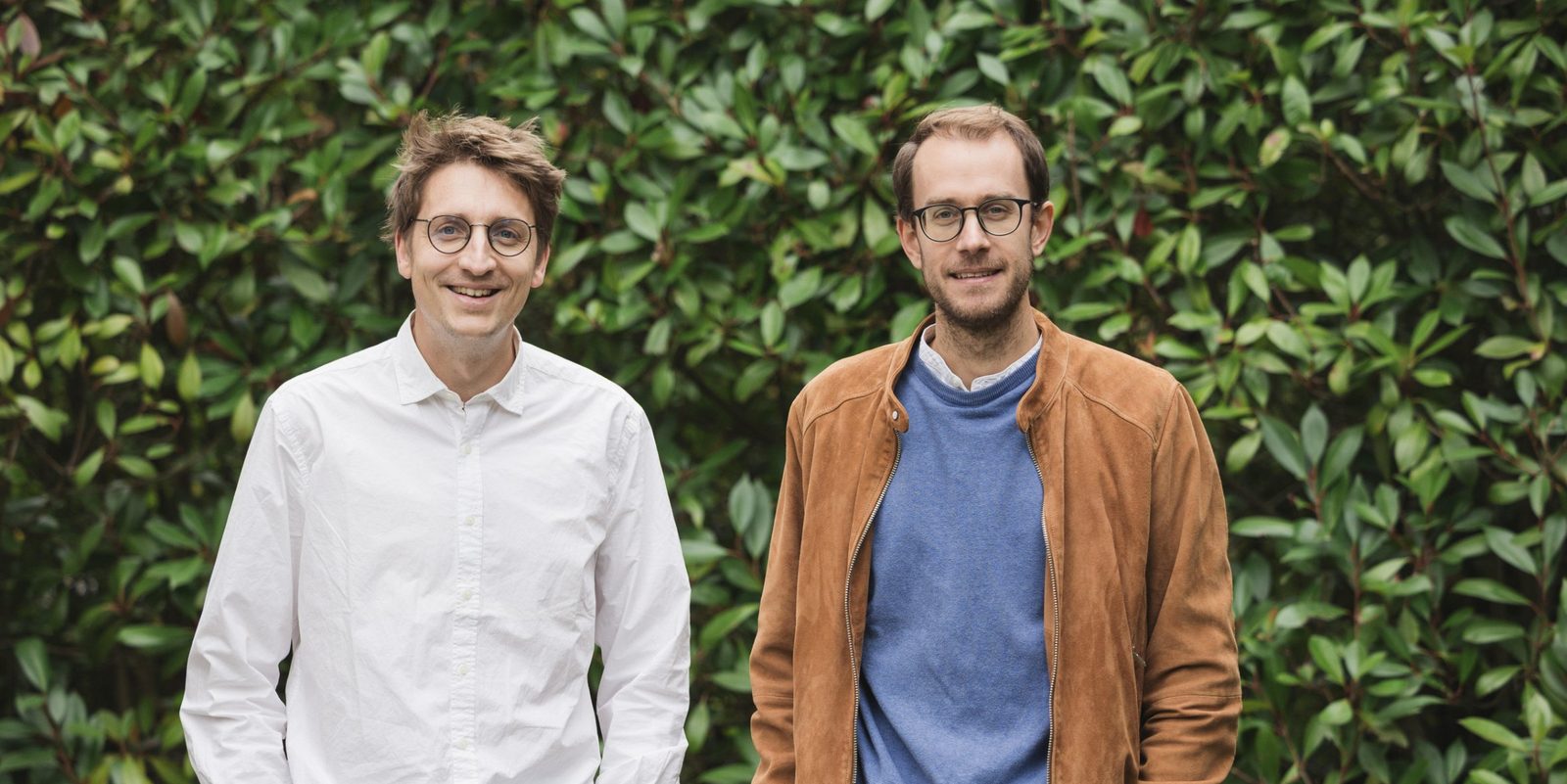
Two serial entrepreneurs and deep technologists, with more ideas than hours on how to make models see more.
Most people who start a computer-vision company come to it from the screen; Diego came to it from the factory floor, running operations for a wood-flooring group in Indonesia before co-founding a B2B distribution business across Asia and Oceania. He has seen both sides of the chain: how a product is made, how it moves, and how easily it is copied. He moved from goods to software, building ventures and data pipelines himself, and once wound down a startup cleanly, returning capital to its investors. A project on patents led him to the copies that carry no name and no logo, and to Klaimed.
Off the clock he runs trails, takes on at least one intense challenge a year, from ultra races to climbs and expeditions, and builds things with his hands when time allows.
LinkedInYvan has spent nearly twenty years building companies around one conviction: that machines can learn to see. In 2012 he founded Sagacify, which grew into one of Belgium's largest AI firms. It started in classical machine learning and moved into deep learning as the field took off, bringing it into production at dozens of organisations. He went on to build models that identify promising biotech companies for UK and US investment funds, and has led software engineering audits for scale-ups and large corporates.
As CTO of Klaimed, he leads the models and the platform. He follows the frontier of vision research closely, from self-supervised backbones to metric learning, and turns it into systems that hold up in production: clean, robust, built to scale, and able to explain every match feature by feature. The goal is simple to state and hard to reach: a machine that reads a product the way a specialist does.
Off the clock, he is a classically trained pianist and a woodworker. Both demand what he brings to every model: patience, precision, and an eye for the small detail that separates the genuine from the copy.
LinkedIn